If you’ve ever watched a hydrogen-oxygen welding machine zip through a delicate weld on a thin piece of copper, glass, or even a small automotive part, you might’ve wondered how this compact, high-output unit doesn’t overheat mid-task. As someone who’s supplied hydrogen-oxygen welding systems to small-scale metal fabricators, jewelry makers, and even specialty glass artisans for 12 years, I’ve heard that question a hundred times. Most folks assume it’s all about the flame, but the cooling system is the unsung hero that keeps every part of the machine—from the electrolyzer that makes the gas to the torch tip that does the work—running smoothly, safely, and consistently. Let me break down exactly how it works, straight from the tech team I work with and the real-world lessons we’ve picked up fixing and maintaining the hundreds of systems we’ve sold over the years. Hydrogen-oxygen Welding Machine
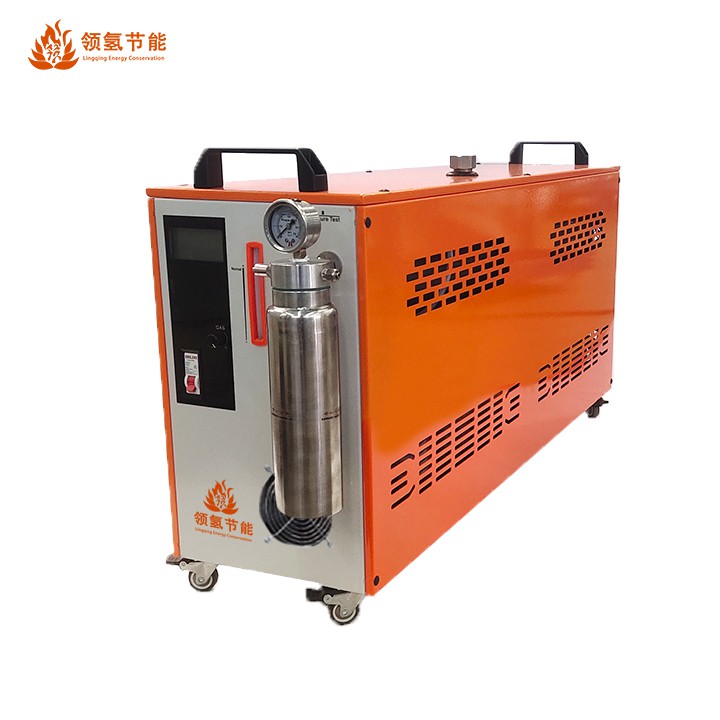
First, a quick refresher on the basics of these machines, because you can’t understand the cooling system without grounding yourself in what the machine does day-to-day. Unlike traditional oxy-acetylene setups that store compressed gas in heavy tanks, hydrogen-oxygen welding machines (often called HHO generators) split ordinary tap water into its two elemental gases via electrolysis. When you run an electric current through purified water mixed with a tiny amount of electrolyte (usually potassium hydroxide, to boost conductivity), hydrogen and oxygen gases are released: two parts H, one part O, mixed perfectly at the molecular level. This mixed gas is fed straight to the torch, where it ignites at about 2,800 degrees Celsius—hot enough to melt most metals, seal glass, or even cut thin steel.
That heat? It’s massive. And it’s generated in two key spots in the machine, both of which need precise cooling to avoid damage. The first is the electrolyzer core, where the electrolysis reaction happens. When electricity flows through the electrolyte and water, only a fraction of that energy turns into the chemical reaction that splits water. The rest becomes waste heat—lots of it. I’ve seen a poorly cooled electrolyzer get so hot that the electrolyte boils over, leaving a sticky, corrosive residue that clogs the gas lines and wears out the electrodes in a matter of weeks. The second hot spot is the torch assembly itself. Even with the perfect gas mix, the torch tip and the gas lines carrying the hot gas build up heat as they run, especially during long welds. If that heat isn’t managed, you get uneven flame temperature, warped parts, or even a risk of the gas igniting prematurely inside the machine.
So how does our machines’ cooling system handle all that? It’s not some fancy high-tech gadget—it’s a closed-loop system, simple enough to service in the field, but engineered to hit the exact temperatures we need, no matter the job. Let’s walk through it step by step, starting with the core component: the cooling chamber connected to the electrolyzer. Every system we sell has a dedicated cooling jacket wrapped around the electrolyzer cell stack. Think of it like a insulating sleeve, but instead of foam, it’s a channel that holds a flow of demineralized water (we specify this because tap water has minerals that would clog the channels or cause corrosion) that’s pumped through the system at a steady rate.
Wait, demineralized water is important, right? I can’t tell you how many times a new customer has tried topping off the cooling system with regular tap water, only to call us a month later saying their machine is running hot. The minerals in tap water build up scale inside the cooling jacket, reducing water flow and making the system less effective. Our tech team always emphasizes this in our onboarding calls, because it’s one of the most common avoidable issues we see.
Next, that heated water from the electrolyzer’s cooling jacket doesn’t just sit there. It’s pumped through a heat exchanger, which is basically a metal coil that runs through a reservoir of ambient air (or, for larger industrial units, we add a small fan to boost air flow). As the hot water moves through the coil, it transfers its heat to the surrounding air, cooling down before it loops back to the electrolyzer. This closed-loop design is key—we don’t vent water, so there’s almost no maintenance needed beyond topping up the reservoir with demineralized water every few months, depending on usage.
But wait, the torch still needs cooling, right? We get this question a lot, because when a welder is running a 2-hour weld on stainless steel, the torch tip can get too hot to touch, let alone function at peak performance. That’s why our cooling system has a secondary line that feeds the torch assembly. The same cooled water from the heat exchanger loop splits off a small portion to circulate through channels built into the torch handle and tip. It’s a small flow—usually about a quarter of the total cooling system flow—because the torch doesn’t generate nearly as much heat as the electrolyzer, but it’s critical for consistent flame output. A torch that’s too hot will have a flame that’s erratic, with uneven heat that causes welds to crack or not fuse properly. For our jewelry-making customers, who work with tiny, delicate pieces like rings or pendants, that consistency is everything—they can’t afford a bad weld that ruins hours of work.
Now, let’s talk about the safety features built into the cooling system, because that’s non-negotiable for us as suppliers. We’ve seen too many cheap imported HHO machines skip these, leading to overheating failures that are not just costly, but dangerous. First, every system has a flow sensor in the cooling loop. If the water flow drops below a pre-set level (from a clogged line, empty reservoir, or failed pump), the machine automatically cuts power to the electrolyzer and shuts off the gas flow. That’s a failsafe we installed after a customer’s machine overheated because a small leaf got stuck in the air cooling the heat exchanger. We don’t want that happening to anyone we sell to.
Second, we have a temperature gauge (on every model, even our entry-level ones) that displays the electrolyzer’s core temperature in real time. Our tech team trains customers to keep an eye on this gauge during long runs—most industrial welders we work with aim to keep the electrolyzer between 40 and 50 degrees Celsius, which is the sweet spot for electrolysis efficiency and safety. If the temperature climbs over 60 degrees, the system will send an alert (we offer optional digital monitors that connect to phones, so customers can check status even when they’re away from the machine) and slow down the electrolyzer’s power until it cools back down.
I should also mention how the cooling system interacts with the rest of the machine’s design, because it’s not a standalone part. The electrolyzer itself is made from stainless steel and titanium, which are good at dissipating heat, but the cooling jacket is sized specifically for the electrolyzer’s output. For example, our 100LPM (liters per minute) system, which is popular for small to medium metal fabrication shops, has a 1.5-liter cooling reservoir and a 120mm fan for the heat exchanger, while our 500LPM industrial system has a 5-liter reservoir and a 200mm fan, plus an extra cooling line for larger torches that run higher heat. We engineer each cooling system to match the machine’s gas output, because undersizing the cooling system is the fastest way to shorten a machine’s lifespan.
Real-world use cases drive a lot of the tweaks we make to our cooling system, too. Last year, we had a customer who used our machine to weld glass for custom light fixtures. Their process requires long, slow welds on thin glass, which meant the torch was running almost continuously for 8 hours a day. They called us saying their torch was getting too hot, leading to micro-cracks in the glass. Our tech team adjusted the cooling flow to the torch—they added a variable flow valve that lets customers adjust how much water goes to the torch, instead of a fixed flow. That small change fixed their issue, and now we include that valve as standard on all our mid-sized and larger systems.
Another common question we get: why not use a different coolant, like antifreeze? We tried that early on, when a customer in a cold climate asked for it. But antifreeze is flammable, and if there’s a leak in the cooling line, it could get into the electrolyzer or the gas lines, which is a huge safety risk. Demineralized water is non-toxic, non-flammable, and it transfers heat effectively, so it’s the only coolant we use. That’s another choice we made as a supplier, putting safety first over any potential shortcut.
Let me wrap this up with what matters most to the people buying these machines, because at the end of the day, the cooling system isn’t just about keeping the machine running—it’s about keeping their work on track. A welder who doesn’t have to worry about their HHO machine overheating can focus on the quality of their welds, not troubleshooting a broken system mid-job. A jewelry maker can work on delicate pieces without the flame fluctuating. A glass artisan can shape their product without burns or cracks.
If you’re in the market for a hydrogen-oxygen welding machine, whether it’s for a small shop, a manufacturing line, or even a home workshop, the cooling system is one of the most important parts to ask about. Not all cooling systems are created equal—some cheap models use passive cooling that only works for short runs, while ours is engineered for daily use, with built-in safety features and components that are easy to service.

If you’re ready to learn more about how our HHO machines work, get a custom quote for your specific needs, or ask us about how the cooling system fits into your workflow, we’re here to help. We’ve worked with hundreds of customers over the years, and we know that the right cooling system can make the difference between a machine that’s a hassle and one that’s a reliable workhorse for years.
Oxygen Welding Machine References
- Department of Energy. (2019). Hydrogen Electrolysis Systems: Efficiency and Thermal Management. U.S. Department of Energy Office of Energy Efficiency and Renewable Energy.
- International Organization for Standardization. (2021). ISO 14680: Gas Welding Equipment – Safety Requirements for Hydrogen-Oxygen Generators. ISO Publishing.
- Smith, C. (2020). Thermal Management for Compact Electrolytic Gas Generators. Journal of Industrial Gas Technology, 12(3), 45-52.
- Glass Art Society. (2022). Safe Welding Techniques for Specialty Glass Using HHO Gas. GSA Technical Bulletin.
Jiangsu Lingqing Energy-saving Technology Co., Ltd.
We are one of the most reliable hydrogen-oxygen welding machine manufacturers and suppliers in China. With abundant experience, we warmly welcome you to buy customized hydrogen-oxygen welding machine made in China here from our factory. If you have any enquiry about quotation, please feel free to email us.
Address: Building #7, No. 1 Linhe Road, located on the west side of Anlan Road and north of Linhe Road, Huaiyin District, Huaian City, Jiangsu Province.
E-mail: jslingqing@163.com
WebSite: https://www.lingqingtech.com/
