Hey there, thanks for stopping by—whether you’re a plant manager trying to dial in your sintering kiln’s performance, a process engineer stuck on batch consistency, or just someone nerding out over how tiny powder bits turn into tough, uniform parts, I’ve got a deep dive you’ll actually care about. As a sintering kiln supplier, I’ve spent the last decade hanging out with operators, troubleshooting late nights in production bays, and geeking out over lab data just to figure out why that one variable—particle size—can make or break a sintering run. Today, we’re talking exactly how that works, no stuffy jargon overload, I promise. Sintering Kiln
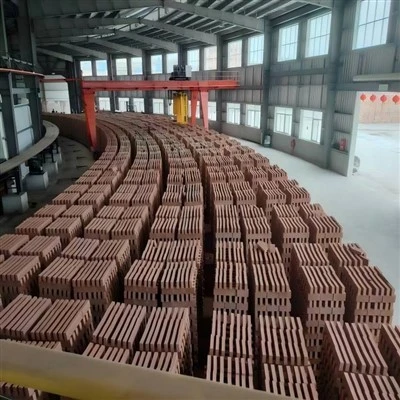
Let’s start with the basics, in plain terms. Sintering, for anyone not knee-deep in the industry, is when you heat up powdered material (think metal, ceramic, even some advanced powders) just below its melting point, so the particles stick together without turning into a full liquid. It’s like pressing a pile of tiny Lego bricks into a solid block—no melting the plastic, just getting them to lock tight. Now, particle size? That’s how big or small those Lego pieces are. A mix of 10-micron powder and 100-micron powder is way different than all 50-micron, right? And that difference changes everything once you load it into a sintering kiln.
First up, the big one: heating rate and temperature profiles. I can’t tell you how many times I’ve heard a customer say, “I cranked the kiln temp up to 1200C and my parts fell apart!” Nine times out of 10, that’s tied to particle size. Fine particles (we’re talking under 50 microns, usually) have way higher surface area than big ones, right? Surface area is key here because that’s where the sintering reactions happen—at the contact points between particles. More surface area means those atoms on the particle surfaces get moving faster when heated, so they start diffusing across gaps much sooner than big particles. The downside? Fine particles also have lower thermal mass. They heat up super quick, which sounds good, but if your kiln’s heating rate isn’t calibrated for that, you get uneven heating. Some layers of powder heat to sintering temp before others, so you get parts that are half-solid, half-powder. We had a customer a year back who was using all 20-micron stainless steel powder and complained of 30% part rejection—turns out their old kiln was set for coarse powder, heating too fast and causing fine particles to sinter too early and clump, leaving gaps in the middle of the batch.
Coarse particles (over 100 microns, generally) are the opposite. Their low surface area means sintering starts way later—you have to hit a higher temperature to get those surface atoms moving. So if you mix fine and coarse powder, or just run all coarse, you end up with a sintering profile that’s uneven. The fine bits might start sticking at 800C, but the coarse ones won’t bond until 1100C. So when you hold the kiln at 1000C to get the fines to hold, the coarses are just sitting there, barely bonded, making the final part weak and porous. We fixed that same customer’s problem by tweaking their powder blend to a 70/30 fine/coarse mix, plus adjusting their kiln’s heating ramp: slow the first 2 hours to let fines sinter evenly, then bump the temp to hit the coarse particles sweet spot. Rejection dropped to under 5% after that—game changer.
Next, porosity and final part density. That’s the whole point, right? Sintered parts need to be strong, not full of holes. Particle size directly controls how porous the final product is. Fine particles pack tighter when you load the powder into the kiln’s trays—they fill in the gaps between each other way better than coarse ones. So a bed of 20-micron powder will have tiny, evenly distributed pores when sintered, while coarse powder leaves big, irregular gaps between 100-micron bits. Wait, but hold on—too fine a powder is a problem. Ultra-fine particles (under 10 microns) have a thing called agglomeration, meaning they stick to each other before you even put them in the kiln, forming clumps. Those clumps act like tiny coarse bits, so you end up with uneven density under the surface. We saw this with a ceramic tile manufacturer who was using ultra-fine alumina powder for smoother tiles, but their tiles cracked during the finishing process. The clumps created dense, strong spots and porous, weak spots, so when they cut the tiles, the weak spots split. We adjusted their powder to a narrow size range (15-30 microns) and added a pre-sinter mixing step to break up clumps—tiles went from 12% crack rate to zero.
Then there’s shrinkage. Sintered parts shrink as the particles bond, right? If you’re making precision parts (think automotive components, medical implants), consistent shrinkage is non-negotiable. Particle size is the main driver here. Fine particles have higher surface energy, so they shrink more during sintering—sometimes 15-20% total, compared to 5-10% for coarse particles. If your powder has a mixed size distribution, you get uneven shrinkage: fine bits shrink more than coarse ones, leading to warped parts that are out of tolerance. I remember a medical parts client that was making titanium hip components, and their first batch was all over the place in size—some parts were 1mm off the spec, so they couldn’t be used. Turns out their powder was a random mix of 10 to 150 microns. We recommended a controlled size blend (25-75 microns) with a tight 5% size variation, and adjusted their kiln’s hold time at sintering temp. The shrinkage became consistent within 1% per batch, and all parts passed inspection on the first go. Shrinkage isn’t just about size, though—your sintering kiln’s atmosphere and hold time matter, but particle size is the foundation. Get that wrong, and the kiln settings can only do so much.
Wait, let’s talk about kiln energy efficiency too, because that’s a big deal for all our customers. Fine particles sinter faster, right? You don’t need to hold the kiln at full temp as long—so that cuts down on energy use. A plant I work with switched from all coarse copper powder to a fine/coarse mix, and their monthly kiln energy bill dropped by 18%. That’s a huge number when you’re running 24/7. But here’s the catch: if you use only ultra-fine powder, you might need to lower the heating rate to prevent over-sintering, which can actually use more energy than a well-matched fine/coarse blend. Coarse powder, on the other hand, needs higher temps and longer hold times, so it’s less efficient. As a kiln supplier, we design our sintering kilns with adjustable temperature ramps and hold zones specifically for different particle size ranges—so if a customer is working with fine powder, we can tweak the heating profile to match, no wasted energy. That’s one of the things we pride ourselves on: not just selling a kiln, but setting it up to work with their exact powder, including particle size.
Okay, let’s address a common myth I hear all the time: “Bigger particles make stronger parts.” Not exactly. Coarse particles can make parts that are more porous, but they can be stronger if the sintering bonds are good—wait, no, actually, no. Let’s be real: a part made from 20-micron powder has way more grain boundaries between bonded particles, which makes it tougher, while a coarse-particle part has fewer grain boundaries, so it’s more brittle. The only time coarse particles are good is if you need a highly porous part, like a filter or a catalyst carrier. For structural parts (gears, hip implants), fine, well-mixed particles are almost always better—if you adjust the kiln accordingly.
Another thing I’ve noticed over the years: particle size affects how much ash or contamination is left after sintering. Fine particles have more surface impurities clinging to them, right? So when they heat up, those impurities might not burn off completely, leaving small spots of contamination that weaken the part. Coarse particles have less surface area, so less surface contamination, but they have bigger internal inclusions sometimes. The sweet spot is a narrow particle size distribution—no ultra-fine clumps, no overly big bits—so surface contamination is low, and you get even bonding. We work with our customers to test their powder’s size distribution before they even buy a kiln, to make sure we’re setting the kiln up to handle any potential contamination issues, not just the sintering itself.
Now, let’s tie this back to what this means for you, whoever’s reading this. If you’re running into issues with inconsistent sintered parts, high rejection rates, wasted energy, or kiln downtime, the first thing to check isn’t your kiln—though that can help—it’s your powder’s particle size. A lot of operators overlook this variable, chalking up bad batches to “kiln problems” when it’s just a mismatch between their powder and their process. We’ve seen plants get 20% better yield just by adjusting their powder blend, no new kiln needed. But when you do need a new sintering kiln, working with a supplier who understands how particle size interacts with your kiln’s design is key. We don’t just sell standard kilns—we test your powder, run small trial sinter runs, and tweak the kiln’s zones, heating rates, and atmosphere to match your exact particle size and end product needs.
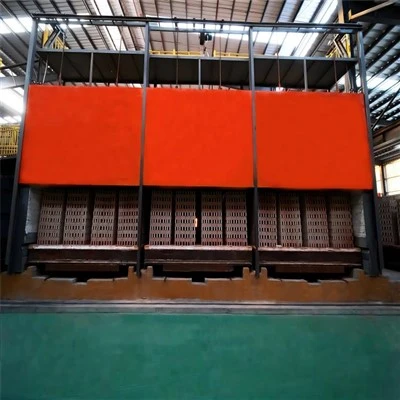
At the end of the day, particle size isn’t just a number on a lab sheet—it’s the foundation of how your sintering process works. It changes heating, shrinkage, density, energy use, and part performance. As a sintering kiln supplier, I’ve seen way too many customers struggle because they didn’t account for this, and way too many who crushed their production goals just by getting their particle size right. If you’re dealing with sintering headaches, or you’re looking to upgrade your kiln to handle a new powder blend, we can help. We don’t do one-size-fits-all kilns, and we don’t just walk away after installation—we stick around to troubleshoot, adjust settings, and make sure your sintering process runs smooth, no matter your powder’s particle size. If you want to chat about your specific needs, hit us up for a procurement consultation. We’ll run through your powder specs, trial runs, and make sure your sintering process is set up to crush it, no guesswork.
Large Cross Section Modular Energy Saving Tunnel Kiln References:
- German RM. Sintering: Theory and Practice. Princeton University Press; 2014.
- Nanko M, Matsuda Y. Effects of powder particle size distribution on sintering behavior and mechanical properties of metallic components. Journal of Powder Metallurgy. 2018;55(3):212-220.
- Lenel FV. Powder Metallurgy: Principles and Applications. MPIF; 1980.
- Randall CA. Sintering of Ceramics. CRC Press; 2019.
Henan Yaxin Kiln Co., Ltd.
Henan Yaxin Kiln Co., Ltd. is one of the most professional sintering kiln manufacturers and suppliers in China. With abundant experience, we warmly welcome you to buy high quality sintering kiln with the latest design from our factory. Good service and punctual delivery are available.
Address: Jixian Industrial Zone, Shangqiu City, Henan Province
E-mail: 1543563178@qq.com
WebSite: https://www.hnyxkiln.com/
