If you’ve ever worked in a cleanroom—say, a semiconductor fab, a pharmaceutical manufacturing space, or a biotech lab—you know how non-negotiable every tiny detail is. A stray fiber, a particle of dust, even a single flake of paper lint can derail a $10,000 batch of wafers, a critical vaccine trial, or a sterile medical device. As a cleanroom paper supplier, I talk to folks in these spaces all the time who see their cleanroom supplies as just another line item in the budget, something to pinch pennies on whenever possible. But here’s the thing: cheap, low-grade paper isn’t a way to save money—it’s a ticking cost bomb that hits when you least expect it. Today, let’s break down exactly how the right cleanroom paper drives real cost-effectiveness, from cutting downtime to reducing waste that piles up faster than you’d think. Cleanroom Paper
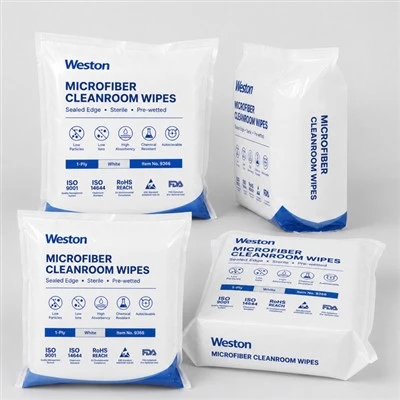
First, let’s get one thing straight: regular office paper has no business in a cleanroom. I’ve had lab managers tell me, “We just use regular copy paper for quick notes when we’re suiting up”—stop that. Regular paper is loaded with wood pulp fibers, fillers, and binders that shed like crazy. Every time you touch a sheet, you’re leaving a trail of micro-particles that can contaminate your work surface, your tools, even your product. When that happens, you’re not just wasting the paper—you’re wasting hours of work, a batch of materials, and the man-hours to re-do it all.
Let’s talk about labor and downtime, because that’s where a lot of the hidden cost leaks live. A semiconductor fab worker once told me that a single particle from bad paper caused a defect in 20 wafers, and it took his team 8 hours to isolate the source, clean the zone, and reprocess the damaged stock. Let’s do quick math on that: if their team averages, say, $50 an hour per person, that’s 8 hours x 3 people = $1,200 in labor alone, plus the $2,000+ cost of the wafers. That’s $3,200 down the drain because they cut corners on a $5 roll of paper. Good cleanroom paper is engineered to have 99.9% less particle shedding than regular paper (we test our products to meet ISO 14644-1 standards, by the way)—so that downtime? It’s basically eliminated. No more tracking down why a batch is failing, no more deep-cleaning entire zones for hours on end. Your team sticks to their workflow, not fire-fighting contamination.
Then there’s waste, which is a huge, underrated cost driver in cleanrooms. Low-grade paper isn’t just shedding particles—it might tear easily, or fall apart when you use it to wipe down a hood or handle a sensitive part. I’ve seen teams use 3x as much cheap paper to do the same job as a good roll, because half the sheet is useless by the time they’re done. Good cleanroom paper is denser, has better tensile strength, and is engineered for exactly what you’re using it for: some is thick enough for heavy-duty wiping, some is smooth for labeling, some is lint-free for delicate tools. So you use less, period. Less paper means less time spent restocking, less storage space taken up by supplies (cleanrooms are tight on real estate, let’s be real—every square foot is valuable), and less waste to dispose of. Wait, waste disposal in a cleanroom isn’t free, either. You have to bag it, seal it, and often have it removed by a specialized vendor because it’s contaminated or high-particulate. Less paper = less disposal cost, plain and simple.
Speaking of specialized needs, let’s talk about compliance. A pharmaceutical manufacturer I worked with told me that they got audited by the FDA last year, and a major point of non-conformity was their use of non-validated paper for documentation in their sterile production area. The auditor flagged that the paper’s particle shedding could compromise product sterility, and the company had to pull a 50,000-unit batch of injections just to re-do all the paperwork that wasn’t compliant. That cost them over $100,000 in product, plus fines and re-audit fees. Good cleanroom paper isn’t just about particles—it’s validated for compliance with ISO, FDA, GMP, whatever standard you’re working to. You don’t have to stress about audits, about product recalls, about losing credibility with regulators. That’s a cost you can’t put a price on, but choosing the right paper removes that risk entirely.
Wait, and let’s not forget about versatility. Our lines of cleanroom paper don’t just do one thing. We have paper that’s perfect for labeling wafers—doesn’t smudge, doesn’t shed, stays on through cleaning cycles. We have heavy-duty wiper paper that works for wiping down equipment, picking up spills, even mopping small messes without leaving lint. We have lightweight paper for quick notes, for wrapping small parts, for anything you need to do in the cleanroom without risking contamination. So instead of buying 5 different types of cheap paper that all underperform, you buy one (or two) versatile rolls that cover every task. Less SKUs, less inventory to track, less confusion on the floor—another small cost that adds up.
Let’s be clear: we’re not here to sell you overpriced fancy paper for no reason. Our whole business is built on making cleanroom supplies that give you the exact performance you need without wasting a single penny. I know cash flow is tight for a lot of cleanroom operators, especially with supply chain chaos and material costs going up. But the mistake so many make is thinking, “This paper is cheaper per roll, so it’s better.” No—look at the total cost of use. If a $20 roll of our paper lasts twice as long as a $5 roll of cheap paper, and doesn’t cause downtime or waste, that’s a 10x better deal. It’s the same as buying a reliable tool vs. a cheap one that breaks after one use: you pay more upfront, but you don’t lose money when it fails.
I get it, changing up supplies on the floor can feel like a hassle. Maybe you’ve had bad experiences with other vendors before, or your team has a routine they’re comfortable with. But the difference is night and day. Last quarter, a client switched from a generic paper they’d been using for years to our product, and their reported contamination-related downtime dropped by 70%. Their paper usage went down by 40%, and they saved over $15,000 in labor and waste disposal in just three months. That’s not a fluke—that’s what happens when you stop seeing paper as a commodity and start seeing it as part of your core contamination control strategy.
Here’s the thing: cleanrooms exist to make products that have to be perfect. One tiny mistake from a cheap supply can ruin months of work, thousands of dollars in materials, and even your company’s reputation. The right cleanroom paper doesn’t just prevent that—it actually makes your team more efficient, cuts unnecessary costs, and lets you focus on what matters: making great products, not putting out fires.

If you’re tired of wasting money on paper that doesn’t deliver, or you’re dealing with contamination issues that you just can’t pin down, let’s chat. We can walk through your specific needs, show you how our paper fits your workflow, and give you a clear breakdown of exactly where you’ll save money. No pushy sales stuff, no hidden fees—just straight talk from a supplier who’s been in this space long enough to know that cost-effectiveness isn’t about cutting corners, it’s about making every dollar count. Reach out whenever works for you to start the conversation.
Cleanroom Wipers References
- International Organization for Standardization (ISO). 2013. ISO 14644-1: Cleanrooms and associated controlled environments — Part 1: Classification of air cleanliness by particle concentration.
- U.S. Food and Drug Administration (FDA). 2021. Guide to Inspections of Pharmaceutical Cleanrooms and Contamination Control.
- National Institute for Occupational Safety and Health (NIOSH). 2019. Contamination Control in Semiconductor Manufacturing Facilities.
- Cleanroom Technology Association (CTA). 2022. Cost-Effectiveness of Cleanroom Consumables: A Benchmarking Report.
Hangzhou Weston Manufacturing Co., Ltd.
As one of the most professional cleanroom paper manufacturers and suppliers in China, we have world-leading production equipment and strong manufacturing capabilities. Please feel free to buy bulk premium cleanroom paper made in China here from our factory.
Address: Building 6, Jiuzhou Tong Health City, No. 5 Longxing West Street, Hanyang District, Wuhan, China
E-mail: sales@westonwiper.com
WebSite: https://www.westonwiper.com/
