Hey there! I’m a supplier of screened control cables, and today I wanna chat about how the shielding layer thickness of a screened control cable affects its performance. It’s a topic that’s super important in our industry, and I’ve seen firsthand how the right thickness can make a huge difference. Screened Control Cable
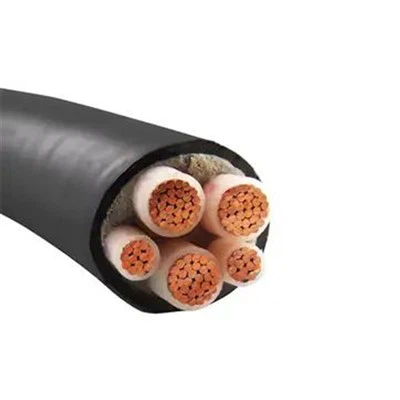
Let’s start with the basics. A screened control cable is designed to protect the signals it carries from external electromagnetic interference (EMI). The shielding layer plays a crucial role in this. It acts as a barrier, blocking out unwanted electromagnetic fields that could otherwise disrupt the signals.
So, how does the thickness of this shielding layer come into play? Well, the thicker the shielding layer, the better it is at blocking EMI. A thicker shield can absorb and dissipate more of the electromagnetic energy, reducing the amount that reaches the inner conductors. This means that the signals inside the cable are more likely to remain clear and accurate.
One of the key factors affected by the shielding layer thickness is the cable’s attenuation. Attenuation is the loss of signal strength as it travels through the cable. A thicker shielding layer can help to reduce attenuation by minimizing the impact of external interference. This is especially important in applications where long cable runs are required, or where the cable is exposed to high levels of EMI.
Another important aspect is the cable’s crosstalk performance. Crosstalk occurs when signals from one conductor interfere with signals in another conductor within the same cable. A thicker shielding layer can help to reduce crosstalk by providing a better barrier between the conductors. This results in cleaner signals and less interference between different circuits.
But it’s not all about the benefits of a thick shielding layer. There are also some trade – offs to consider. A thicker shielding layer means more material, which can increase the cost of the cable. It also makes the cable heavier and bulkier, which can be a problem in applications where space is limited.
In some cases, a thinner shielding layer might be sufficient. For example, in environments with low levels of EMI, a thinner shield can still provide adequate protection at a lower cost. It’s all about finding the right balance between performance and cost.
Let’s talk about some real – world applications. In industrial settings, where there are lots of electrical machines and equipment generating EMI, a thicker shielding layer is often necessary. For example, in a factory, control cables need to be able to withstand high levels of interference to ensure reliable operation of the machinery.
On the other hand, in a home or office environment, where the EMI levels are relatively low, a thinner shielding layer might be enough. For instance, in a home automation system, the cables don’t need to be as heavily shielded as in an industrial setting.
When it comes to choosing the right shielding layer thickness, it’s important to consider the specific requirements of the application. Factors like the level of EMI in the environment, the length of the cable run, and the sensitivity of the signals being carried all play a role.
We, as a screened control cable supplier, have a wide range of cables with different shielding layer thicknesses. We can work with you to understand your needs and recommend the best cable for your application. Whether you’re looking for a cable for a high – EMI industrial environment or a more cost – effective solution for a low – EMI setting, we’ve got you covered.
If you’re in the market for screened control cables, don’t hesitate to reach out. We’re here to help you make the right choice. Our team of experts can provide you with all the information you need to select the cable with the appropriate shielding layer thickness for your project. We’ll work with you every step of the way, from initial consultation to installation and after – sales support.

So, if you’re interested in learning more about our screened control cables or have any questions about shielding layer thickness, just get in touch. We’re ready to start a conversation and help you find the perfect cable for your needs.
Outdoor Electrical Cable References:
- "Electromagnetic Compatibility Engineering" by Henry W. Ott
- "Cable and Wire Rope Handbook" by John D. Margraf
Shenyang Pengcheng Haoyu Technology Co., Ltd
We’re professional screened control cable manufacturers and suppliers in China, specialized in providing high quality customized service. We warmly welcome you to buy cheap screened control cable for sale here and get pricelist from our factory. For price consultation, contact us.
Address: Yilu Industrial Park, Tieling County, Tieling City, Liaoning Province, China
E-mail: Pchengdianlan@163.com
WebSite: https://www.qwlcable.com/
