As the owner and lead technician at a specialized electrical testing equipment supply company, I’ve spent the last 12 years getting asked one question more than any other: “What exactly does a CT PT analyzer do, and why do I need one?” It’s a fair question—for anyone new to power systems, CT PT analyzers can feel like a black box of industrial jargon and technical wizardry. Over the years, though, I’ve seen firsthand how these devices aren’t just “nice-to-have” tools; they’re the backbone of safe, reliable, and compliant power operations across nearly every sector that depends on electricity. CT PT Analyzer
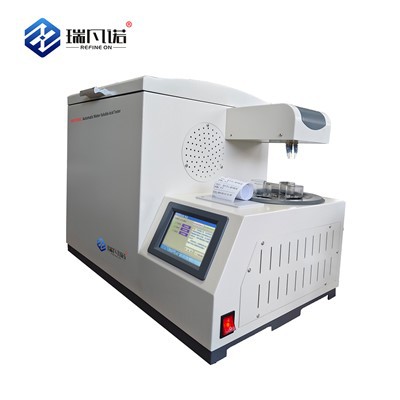
Let’s start with the basics, because you can’t talk about applications without understanding what a CT (Current Transformer) and PT (Potential Transformer) actually do. These two devices are the unsung heroes of power grids, utility substations, commercial facilities, and industrial plants. CTs step down high, dangerous primary currents (think thousands of amps running through a transmission line) into low, safe secondary currents (usually 5 amps or 1 amp) that meters, relays, and monitoring equipment can use. PTs, meanwhile, reduce high primary voltages (up to hundreds of thousands of volts for transmission) to standard secondary voltages (typically 120 volts or 110 volts) for the same monitoring and protection tools.
The job of a CT PT analyzer is to test these transformers’ accuracy, performance, and compliance. It injects precise, controlled signals into the CT or PT, measures the output, and calculates critical parameters like ratio error, phase angle error, excitation current, and burden—all the things that tell you if your CT or PT is working as it should. But their applications go far beyond just routine testing. Let’s break down where and how these analyzers make a tangible difference.
First, the most common (and arguably most important) application: routine maintenance testing for utility substations. Utilities are the backbone of our power supply, and a single failed CT or PT can cause cascading outages that affect thousands of homes and businesses. I’ve worked with rural utility co-ops where a missed CT ratio error led to a year of incorrect meter readings—costing the co-op over $200,000 in revenue that year, and leaving customers with sky-high bills. Regular testing with a CT PT analyzer catches these issues before they spiral.
For utilities, routine maintenance schedules usually include annual or bi-annual testing of all CTs and PTs in critical substations. A CT PT analyzer lets techs perform on-site tests without having to remove the transformer from service, which cuts downtime drastically. In 2019, a major municipal utility I partnered with told me that switching from old, manual testing methods to our line of analyzers reduced their substation downtime by 60%—a huge win for both their operational efficiency and customer satisfaction. These tests also help utilities meet regulatory requirements from entities like the North American Electric Reliability Corporation (NERC), which mandates regular testing of power system components to maintain grid reliability.
Next, installation and commissioning testing for new substations or equipment. When a new substation goes online, every CT and PT must be tested before it’s connected to the grid to ensure it meets design specifications. Even a small manufacturing error during production can throw a transformer’s accuracy off, which would lead to incorrect meter readings or failed protection relays. A friend who’s a project manager for a large renewable energy farm told me about a time a new PT had a 5% phase angle error (instead of the required 0.5%) that wasn’t caught during factory testing. When the farm connected to the grid, its power quality monitoring system misreported voltage levels, leading to a 3-day delay in full operations and a $15,000 fine from the grid operator. Testing with a CT PT analyzer during commissioning would have caught that error before installation.
This isn’t just a problem for utilities—industrial facilities like manufacturing plants, mining operations, and data centers also rely on new CT PT testing. A data center, for example, can’t afford even a 10-minute outage; commissioning testing with a CT PT analyzer ensures that their in-house power distribution equipment works as intended from day one, protecting critical servers and avoiding costly downtime.
Another key application: protection relay testing. Protection relays are the first line of defense for power systems—they detect faults like short circuits or overloads and trip circuit breakers to isolate the fault before it causes damage. For a relay to work correctly, it needs accurate inputs from CTs and PTs. If a CT has a ratio error, the relay will see a lower current than actual, and might fail to trip during a fault. If a PT has a voltage error, the relay might trip unnecessarily during normal operation (called a nuisance trip) or fail to detect a voltage drop during an outage.
I’ve seen this firsthand at a steel mill in the Midwest. A 2021 fault in their main power line caused a nuisance trip in their relay, shutting down their entire blast furnace for 12 hours. The root cause? A PT with a 2% voltage error that made the relay think there was an overload when there wasn’t. Using a CT PT analyzer, we tested all their CTs and PTs and found three other transformers with similar small errors that would have caused bigger problems down the line. Today, they test their protection equipment quarterly with our analyzers, and haven’t had a nuisance trip since.
CT PT analyzers also play a critical role in legacy equipment testing. Many older substations and industrial plants have CTs and PTs that are 20, 30, or even 50 years old. These transformers degrade over time from thermal stress, moisture ingress, or mechanical damage—leading to accuracy loss or even failure. Testing legacy equipment with a CT PT analyzer helps facility managers decide when to repair, refurbish, or replace old transformers. Refurbishing a CT or PT costs a fraction of replacing it, so accurate testing helps companies make smart budget decisions. A power plant I work with regularly tests their 30-year-old CTs with our analyzers; last year, they found that two transformers only needed a coil rewind (costing $8,000 total) instead of full replacement (which would have cost $120,000 each).
Then there’s the less talked-about application: meter calibration and billing accuracy. Utility customers (both residential and commercial) rely on meters to bill them correctly, and meters get their input from CTs and PTs. If a CT or PT is inaccurate, the meter will be too, leading to either overcharging (which erodes customer trust) or undercharging (which hits the utility’s bottom line). For commercial and industrial customers with large power loads, even a 1% error can add up to thousands of dollars a year. For example, a manufacturing plant with a 10,000 kVA load would see a $5,000 annual difference on their bill from a 1% CT ratio error. CT PT analyzers let both utilities and customers test this accuracy, ensuring fair billing and transparent operations.
I’ve also started seeing a growing application in the renewable energy sector, which is huge right now. Solar farms, wind farms, and battery energy storage systems (BESS) all use CTs and PTs to measure power output, track grid compliance, and monitor battery performance. Wind turbines, in particular, are located in remote, harsh environments—high winds, extreme temperatures, and salt corrosion near coastal sites—so their CTs and PTs degrade faster than those in traditional substations. A CT PT analyzer lets technicians perform on-site testing at wind turbine sites without having to move the equipment, which is a massive logistical win. A wind farm in Texas I supply to has 50 turbines spread across 20 square miles; before they bought our portable CT PT analyzers, they had to hire a crane to lift each turbine’s transformer off for testing, costing $5,000 per test. Now, they test each transformer in 20 minutes on-site, for a total cost of $200 per test—saving over $200,000 a year.
Of course, not all CT PT analyzers are the same, and the right tool depends on the application. Some are designed for on-site use (portable, rugged, battery-powered) perfect for substation or field testing, while others are benchtop models for factory or lab use, offering more precise measurements for calibration work. Some advanced analyzers can also test additional parameters like polarity, turns ratio, and magnetization curve, which are useful for more complex applications like high-voltage transmission equipment.
I want to be clear: a CT PT analyzer isn’t just a testing device—it’s an investment in reliability, safety, and cost savings. I’ve heard from too many clients who skipped testing or used outdated methods, only to face costly outages, fines, or safety hazards. Last year, a small substation in a northern state had a CT fail during a winter storm, cutting power to 1,200 customers for 8 hours. The utility told me later that they’d put off testing their CTs because their old analyzer was too slow; a single test took 2 hours, so they only did 10 a month. Switching to our portable analyzers, which test a CT in 15 minutes, they now test all their critical transformers every 6 months, and haven’t had a major outage related to CT PT failure since.
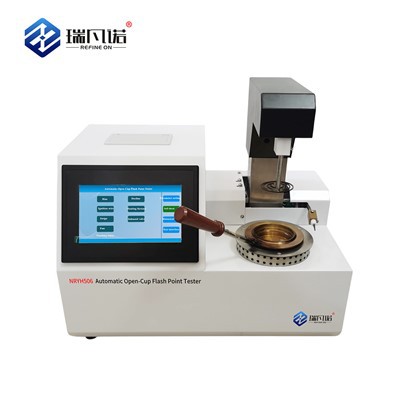
If you’re a utility manager, industrial plant engineer, renewable energy project lead, or anyone responsible for power system operations, the right CT PT analyzer is a tool you can’t afford to overlook. It prevents costly downtime, ensures compliance with regulations, protects your equipment and workforce, and saves money in the long run. If you’re looking to upgrade your testing equipment, need help choosing the right model for your specific applications, or want to schedule a demo to see our analyzers in action, please reach out to our team to discuss your requirements. We work with facilities of all sizes, from small rural co-ops to large industrial complexes, and we’ll help you find a solution that fits your needs and budget.
Resistance Tester References
- North American Electric Reliability Corporation (NERC). "Standard MOD-026: Facility Equipment Maintenance and Testing." 2022.
- International Electrotechnical Commission (IEC). "Standard 61869: Instrument Transformers." 2018.
- U.S. Department of Energy. "Reliable Power Grid: Instrument Transformer Testing Best Practices." 2021.
- Edison Electric Institute (EEI). "2023 Outage Cost Survey: Trends in Power System Downtime."
Refine On (Hebei) Electric Power Technology Co., Ltd.
Refine On (Hebei) Electric Power Technology Co., Ltd. is one of the most reliable ct pt analyzer manufacturers and suppliers in China, also supports customized service. Please feel free to wholesale advanced ct pt analyzer at competitive price from our factory. Contact us for quotation.
Address: Building 13, Liandong U Valley, No.64, Jing SAN South Street, Economic Development Zone, Mancheng District, Baoding City, China
E-mail: victor@transformer-test.com
WebSite: https://www.transformer-test.com/
