When a client reaches out to our team as a Metal Consumer Units supplier, one of the most common questions we get—right after, “Do your MCUs meet current wiring regulations?”—is, “Do Metal Consumer Units come with installation instructions?” It’s a fair question. For anyone handling electrical work, whether it’s a seasoned electrician or a homeowner taking on a small upgrade, clear, accurate documentation isn’t just a nice add-on; it’s non-negotiable. Over the years, we’ve seen firsthand how missing or incomplete instructions can lead to delays, safety risks, and even costly rework. That’s why we make it a core part of our process to ensure every MCU leaves our warehouse with a full, actionable set of guidance. Metal Consumer Units
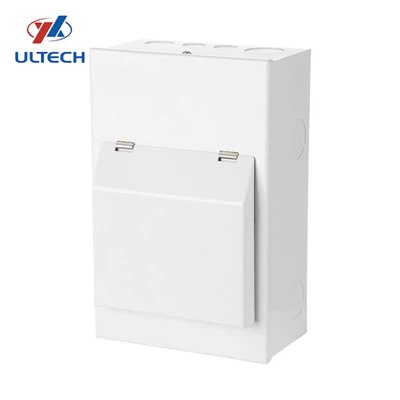
First, let’s clarify what a Metal Consumer Unit is, for anyone who might be new to the term. Often called a consumer unit (or distribution board) in residential and light commercial settings, it’s the central hub for your home’s electrical supply: it connects the main power feed, distributes electricity to individual circuits, and houses safety devices like circuit breakers, RCDs (Residual Current Devices), and MCBs (Miniature Circuit Breakers). The metal casing is a key feature here—it’s more durable, fire-resistant, and offers better electromagnetic shielding than plastic equivalents, which is why so many contractors prefer them for properties in areas with harsher weather or higher foot traffic.
Now, back to the instructions. The short answer is yes, every metal MCU we supply comes with detailed installation instructions, but the long answer is worth diving into because not all instructions are created equal. Too many suppliers cut corners here, printing vague pamphlets that just say “fit to main supply” without breaking down steps. We don’t do that. Our instructions are tailored specifically to metal consumer units, accounting for the unique properties of metal casings that plastic units don’t share. For example, metal requires proper earthing to prevent electrical leakage, so our instructions dedicate a full section to bonding the unit’s metal casing to the main earthing terminal—something that’s easy to overlook if you’re used to working with plastic consumer units, where the casing itself doesn’t carry the same electrical risk.
Let’s break down what those instructions include, because it’s not just a page of text. First, we start with pre-installation checks. Before anyone even touches the unit, we list the tools required: insulated screwdrivers, cable cutters, a voltage tester, a drill, and a spirit level. We also note that it’s critical to turn off the main power at the consumer’s electricity meter before starting any work—this isn’t a generic warning; it’s a step we emphasize repeatedly, because electrical accidents are preventable, but only if you take that basic precaution. For metal units, we also add a check: confirm the mounting surface is solid enough to support the weight of the metal casing, since metal is heavier than plastic. That’s a detail we’ve heard from clients who tried mounting their unit on a flimsy wallboard and ended up with a misaligned, unsafe installation.
Next comes the core installation steps. We structure these logically: first, mounting the unit, then running the main supply cable, then installing individual circuit breakers, then earthing and bonding. For each step, we use diagrams that are specific to our metal consumer units, not generic ones. For example, the diagram for bonding: we show exactly where the earthing lug is located on the back of the metal casing, how tight the screw should be (we specify a torque setting of 2.5 Nm, which is industry standard for metal units to ensure a secure connection without stripping the metal’s threads), and what type of cable to use for bonding (a 6mm² copper cable, per UK Wiring Regulations, for context). We also label each part clearly—no confusing jargon—so even if you’re a trainee electrician still learning the ropes, you can follow along.
A big part of our instructions is safety, and that’s non-negotiable for metal consumer units. Metal conducts electricity, so if the unit isn’t properly installed, it can become a shock hazard. Our instructions include a full section on testing: after installation, how to test each RCD to make sure it trips at the correct current, how to check for continuity in the earthing system, and a final insulation test before switching the power back on. We also list common mistakes to avoid, like overloading the unit’s busbars—another issue unique to metal units, because the busbars in metal casings are designed for a specific maximum current, and installing too many high-amp circuits can cause overheating. We’ve seen this happen to a few clients who ignored that warning, leading to a tripped circuit breaker or, in worst cases, a faulty busbar. That’s why we make that mistake list as long as the step-by-step guide.
But here’s the thing: we don’t just send a pamphlet with the unit. For our clients—most of whom are professional electricians, electrical contractors, and small building companies—we also offer digital copies of the instructions, plus supplementary guides. That’s because some contractors prefer to save the PDF to their phone or tablet while on site, instead of carrying a paper copy that can get dirty or lost. Our digital versions are interactive, too: you can tap on a diagram to zoom in, search for specific terms (like “RCD replacement”) quickly, and even access video tutorials we’ve made that walk through the installation process for our metal consumer units. For smaller projects, or for clients who might need a physical copy to pass to a homeowner, we offer printed copies on request at no extra cost—something most suppliers charge for.
Wait, but what if a client is buying a metal MCU for a DIY project? We don’t sell to homeowners directly, but a lot of our clients do end up working on properties where the homeowner wants to be involved, so we make sure our instructions are clear enough for someone with basic electrical knowledge to follow—with prominent warnings when a step requires a licensed electrician. For example, we note that installing the main supply cable should only be done by a qualified professional, but replacing an individual circuit breaker is something a competent DIYer can do, with clear steps for that. We’ve had clients tell us that our instructions were so clear, they were able to train a new apprentice electrician on their team using only the guide we provide, which is exactly the kind of practical value we aim for.
Of course, there are some myths out there about MCUs, and we address those in our instructions too. One common myth is that metal consumer units are more difficult to install than plastic ones. That’s not true—they’re just different, and the metal’s properties require a few extra steps (like proper bonding) that plastic units don’t. Our instructions bridge that gap, explaining why each step is necessary, not just what to do. For example, we don’t just say “bond the casing”; we explain that metal is a conductive material, so bonding it ensures that any fault current is safely diverted to the earth, protecting people and appliances. That kind of context helps contractors understand the “why” behind the installation, which reduces the chance of mistakes.
We also update our instructions regularly to align with the latest electrical regulations. The wiring rules change every few years, and it’s important that our customers have the most up-to-date guidance. For example, when the 18th Edition of the IET Wiring Regulations came out, we revised our instructions to include new requirements for RCD protection in certain circuits, specifically noting how that applies to metal consumer units. We send out email updates to all our clients whenever we update instructions, so they always have the latest version, no need to track it down themselves.
Now, let’s talk about how we deliver these instructions. When a client orders a metal MCU from us, the instructions are included in the packaging—along with all the necessary fixings, like screws for mounting the metal casing, cable glands for the supply cables, and a sticker set for labeling circuits. We make sure the instructions are printed on durable paper, too, so they don’t tear if they get scratched by a metal tool while on site. For bulk orders, we can also package the instructions separately if needed, but we recommend including them in the main unit box so nothing gets lost during shipping or delivery.
I should also mention that our customer support team is always on hand if someone has questions about the instructions. We know even the clearest guide can have confusing parts, so our team of electrical experts (all of whom have experience installing metal consumer units themselves) can walk a client through a step, clarify a diagram, or help troubleshoot a problem. We’ve had clients call us at 8 PM on a Friday, panicking because they couldn’t find the earthing lug on their metal unit, and our team stayed on the line to guide them through it—no extra charge, no runaround. That’s the kind of service that sets a good supplier apart, and we think it’s just as important as the instructions themselves.
So, to circle back to the original question: Do Metal Consumer Units come with installation instructions? For us, the answer is a resounding yes, but not just a basic one. We don’t cut corners on documentation because we know how critical it is for safety and for getting the job done right. Every metal MCU we supply is paired with instructions that are specific to our product, aligned with current regulations, and designed to be practical for electricians on site.

If you’re an electrical contractor, building company, or anyone looking to source reliable metal consumer units, we’re here to help. Our team can walk you through our product range, answer any questions about installation, and provide all the documentation you need. To discuss your requirements or place an order, reach out to our team today.
60 Amp Safety Switches References:
- IET Wiring Regulations, 18th Edition (BS 7671:2018)
- National Electrical Manufacturers Association (NEMA) Standards for Metal Enclosures
- Electrical Safety Council, “Guidance on Consumer Unit Installation and Safety”
- City & Guilds Level 2 Certificate in Electrical Installation, Unit 202: Installation of Consumer Units
Zhejiang Youtai Electrical Co., Ltd.
We are one of the most experienced metal consumer units manufacturers and suppliers in China. With a professional production team, we are able to meet the needs of the majority of our customers. Please rest assured to wholesale customized metal consumer units from our factory. Contact us for more cheap products.
Address: No.790, Nanming Rd., Shuige Industrial Zone, Lishui, Zhejiang, China
E-mail: sale@ultech.cc
WebSite: https://www.zhejiangyoutai.com/
