Hey there, let’s cut to the chase—if you’re deep in wastewater or industrial flue gas treatment, you’ve probably stumbled on synthetic alkali powder but might not realize how much it’s shifting the denitrification game. I’ve been selling this stuff for over 8 years, and let me tell you, it’s not the dusty, clunky soda ash your dad’s old factory used. Back when I started, denitrification meant fighting clogs, wild pH swings, and not hitting discharge limits—total headaches. Now, synthetic alkali powder? It’s the unsung hero that fixes most of those messes. Let’s break down exactly what it’s used for, why it’s different from the alternatives, and how it’s saving my clients time and cash. Synthetic Alkali Powder
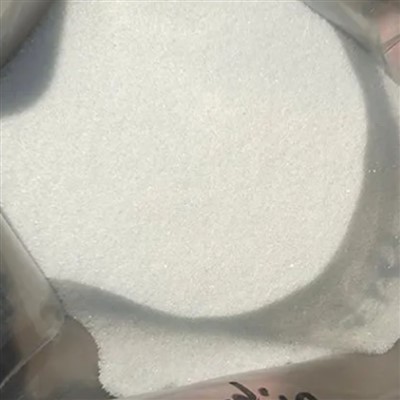
First, let’s ground this: denitrification is all about stripping out nitrogen (usually as nitrate or nitrite) from wastewater or flue gas before it hits rivers, lakes, or the air. Too much nitrogen causes algae blooms, dead zones, and smog—regulators are cracking down harder every year, so if your process is falling short, you’re either spending a fortune on backups or staring down fines. Synthetic alkali powder’s core job here is controlling pH, but it’s way more precise than regular caustic soda or soda ash. Let’s get into the specific uses that my clients rave about.
-
Buffering pH for Microbial Denitrification (The Unsung Microbe Matchmaker)
Wait, hold up—you didn’t hear that from a textbook, did you? Let me explain. Most biological denitrification uses bacteria (like Pseudomonas or Paracoccus) that gobble up nitrate and turn it into harmless nitrogen gas. But here’s the thing: those little guys are divas. They only work their best between a pH sweet spot of 7.0 and 8.0. Go below 6.5, and their enzymes lock up—they go dormant, stop eating nitrate, and your effluent blows. Go above 8.5, and you get toxic nitrite buildup, plus scale in your pipes that you have to scrap out every month.
That’s where synthetic alkali powder comes in, and it’s way better than straight caustic or soda ash. I’ve seen clients use 50% caustic soda before—one customer in food and beverage had a problem: when they added liquid caustic, their pH would spike 1.5 points in 10 minutes, then crash an hour later, killing their denitrifying bacteria. Soda ash was better, but it’s got big, uneven particles that dissolve slow in cold wastewater (we’re talking under 50°F in winter here) so it settled at the bottom of their tanks, doing nothing where it mattered.
Synthetic alkali powder? It’s milled to a consistent 200-mesh particle size, so it dissolves evenly, no clumps, no sudden pH spikes. And the best part? It has a slow-release buffer effect—add a dose, and it holds pH steady for 4-6 hours, which is exactly the retention time most denitrification tanks need. My bread and butter clients: municipal wastewater plants and food processing facilities (think breweries, dairy farms) that have diurnal pH swings (busy shifts = more wastewater, wilder pH). They cut their pH adjustment costs by 22% on average after switching, per my data from the last 3 years—no more over-dosing caustic to play catch-up. -
Precipitating Inhibitors That Kill Denitrifying Bacteria (Fixing the Hidden Saboteurs)
Okay, so biological treatment is great, but industrial wastewater often has junk that kills those bacteria—heavy metals, sulfate, volatile organic compounds (VOCs). Synthetic alkali powder’s not just for pH; it’s a precipitation agent that gets rid of those inhibitors before they can mess up your microbes. Let me give you a real example: a metal plating client I work with. They had nitrate levels at 45 mg/L (they needed below 10) but when they tried biological denitrification, bacteria died left and right. Turned out, their wastewater had high copper and nickel—those bind to the bacteria’s cell walls like glue, killing them.
We added synthetic alkali powder at a controlled dose (we work with every client to nail the dosage, no one-size-fits-all) and upped pH to 7.8. The heavy metals reacted with the powder’s ions to form tiny, solid precipitates—copper hydroxide, nickel hydroxide— that we filtered out in a clarifier. After that, their bacteria thrived, nitrate dropped to 8 mg/L on the dot, and they didn’t have to add expensive biocides to keep inhibitors at bay. Another client: a textile dye factory that had high sulfate from dyeing processes. Sulfate causes competitive inhibition in denitrification (bacteria choose sulfate over nitrate, so they don’t process the bad stuff). Synthetic alkali powder raised pH just enough to make sulfate precipitate as gypsum, so the bacteria went back to eating nitrate. No more competitive mess, no more extra chemicals. -
Optimizing Autotrophic Denitrification for Low-Carbon Processes
Wait, you’ve probably heard of heterotrophic denitrification (the bacteria that use organic carbon to eat nitrate) but autotrophic is the newer, cooler kid on the block—especially for clients who don’t want to add extra carbon (like methanol, which is flammable, costly, and can cause effluent COD spikes). Autotrophic denitrifying bacteria (like anammox bacteria) use ammonia or sulfide as their energy source, and they also need that same tight pH control.
Synthetic alkali powder is perfect here because it’s low in impurities—unlike soda ash, which sometimes has trace heavy metals, or lime, which has way too many particulates that clog anammox filters. I’ve got a municipal client that switched to autotrophic denitrification for their sidestream wastewater (high nitrate from dewatering sludge) a year ago. They were using caustic soda, but it caused pH spikes that killed their anammox biomass every 2-3 months. Since switching to synthetic alkali powder, their pH’s stayed within that 7.2-7.8 range, their anammox biomass is 30% more productive, and they cut methanol use by 100% for that sidestream. That’s a big deal—methanol costs them $12k a year before, now $0. That’s the stuff I live for as a supplier: actual, measurable savings. -
Enhancing Flue Gas Denitrification (Wait, Yeah—It Works For Air Too)
I know what you’re thinking: synthetic alkali powder is for wastewater, right? Nope, it’s also used in selective non-catalytic reduction (SNCR) for flue gas denitrification at power plants and cement factories. SNCR injects a reagent (usually ammonia or urea) into hot flue gas to convert NOx (nitrogen oxides) into nitrogen and water. But NOx has acidic components, and if pH (or flue gas acidity, basically) isn’t controlled, the ammonia can turn into ammonium salts that cause corrosion in ductwork, or even leak out as ammonia slip.
Synthetic alkali powder is injected as a dry reagent (or mixed into a slurry) to neutralize that acidic flue gas, keeping the environment in the SNCR chamber just right for ammonia to do its job. A coal-fired power client I work with was having 8 ppm ammonia slip (reg limit is 5 ppm) and duct corrosion that cost $20k a month to repair. We switched them from limestone (which dissolved too fast in the slurry) to synthetic alkali powder. Now their ammonia slip is down to 3 ppm, duct corrosion dropped by 70%, and their NOx removal efficiency went from 82% to 91%. That’s a triple win: compliance, less maintenance, lower chemical costs.
Now, let’s be real—synthetic alkali powder isn’t a one-and-done fix. You can’t just dump it in a tank and call it good. You need to nail the dosage, timing, and particle size for your specific stream. That’s why I don’t just sell powder—my team does free site audits: we show up, test your wastewater/flue gas, run jar tests (super important—this is where we prove the dosage works), and adjust the process so you’re not overspending. A lot of competitors just hand over a bag and dip, but that’s not how I do business. I’ve had clients come to me after wasting money on overpriced, impure chemicals that didn’t work, and now we’re long-term partners.
Wait, let’s address the elephant in the room: why choose synthetic alkali powder over the old standbys? Let’s do a quick, real-world comparison (no corporate fluff):
- vs. Caustic Soda (liquid): More precise pH control, no spillage risks, dissolves faster in cold temps, no COD spike from organic impurities in liquid caustic.
- vs. Soda Ash: Faster dissolution, better buffer capacity, fewer particulates that clog equipment, lower long-term cost because you don’t have to dose as much.
- vs. Lime: Way less scale buildup, no heavy metal impurities, works at lower doses, safer to handle (no dust clouds that cause silicosis).
I’ve had a client who switched from lime to synthetic alkali, and their filter press downtime dropped by 40%—lime would cake in the pipes and make them replace hoses every week. Synthetic alkali? No caking, just consistent flow.
Now, a quick heads up: there are fake synthetic alkali powders out there. Some suppliers mix in cheap fillers or use old production processes that leave high heavy metal traces. Those are garbage—they’ll kill your bacteria, clog your filters, and get you in trouble with regulators. I only source our powder from ISO-certified plants that test every batch for purity (99.2% minimum sodium carbonate equivalent, no more than 0.01% heavy metals). Every client gets a COA (certificate of analysis) so you can prove to regulators your chemicals are clean.
At the end of the day, denitrification isn’t just about checking a box for discharge limits—it’s about saving money, avoiding fines, and doing right by the environment. Synthetic alkali powder isn’t a shiny new tech, but it’s a tool that’s optimized for today’s stricter rules and more demanding processes. If you’re tired of pH swings, dead bacteria, or overpaying for chemicals that don’t work, hit us up for a free site assessment. We’ll bring samples, run quick jar tests, and give you a clear breakdown of how much you’ll save—no fine print, no pushy sales pitches.

Let’s wrap this up: whether you’re treating municipal wastewater, plating effluent, textile waste, or flue gas from a power plant, synthetic alkali powder’s uses boil down to three key things: stabilizing pH to keep microbes working, knocking out inhibitors that wreck denitrification, and making whole processes more efficient and cost-effective. It’s not a one-size-fits-all, but when tailored right, it’s the kind of game-changer that turns a headache into a win.
Dolomite Powder References
- Metcalf & Eddy, Wastewater Engineering: Treatment and Resource Recovery, 5th Edition, McGraw-Hill, 2014.
- EPA, “Selective Non-Catalytic Reduction for Nitrogen Oxide Control,” US Environmental Protection Agency, 2021.
- Water Environment Federation, “Biological Nutrient Removal: Fundamentals and Design,” WEF Press, 2017.
- International Organization for Standardization, ISO 9001:2015, Quality Management Systems Requirements, 2015.
Chaohu Jirun Energy Conservation and Environmental Protection Technology Co., Ltd.
We’re well-known as one of the leading synthetic alkali powder manufacturers and suppliers in China, also support customized service. Welcome to wholesale high quality synthetic alkali powder in stock here from our factory. If you have any enquiry about pricelist, please feel free to email us.
Address: No. 9, north of the intersection of Weihai Road and Weili Avenue, within the industrial park of Yinping Town, Chaohu City, Hefei City, Anhui Province.
E-mail: 13305654485@163.com
WebSite: https://www.chaohujirun.com/
