Hey there, let’s cut to the chase if you work with industrial equipment—chances are you’ve dealt with overheating, stuck parts, or unexpected downtime in rotating machinery. If fluid film thrust bearings are a key part of your setup, you might’ve wondered how they pull off that magic trick of keeping moving parts from touching, even under tons of load. As a supplier that’s built these things for decades (no random AI jargon here, just real-world stuff), I get that you don’t care for textbook fluff—you want the hard science behind why this bearing stuff works, and how it keeps your gear running for years. Fluid Film Thrust Bearings
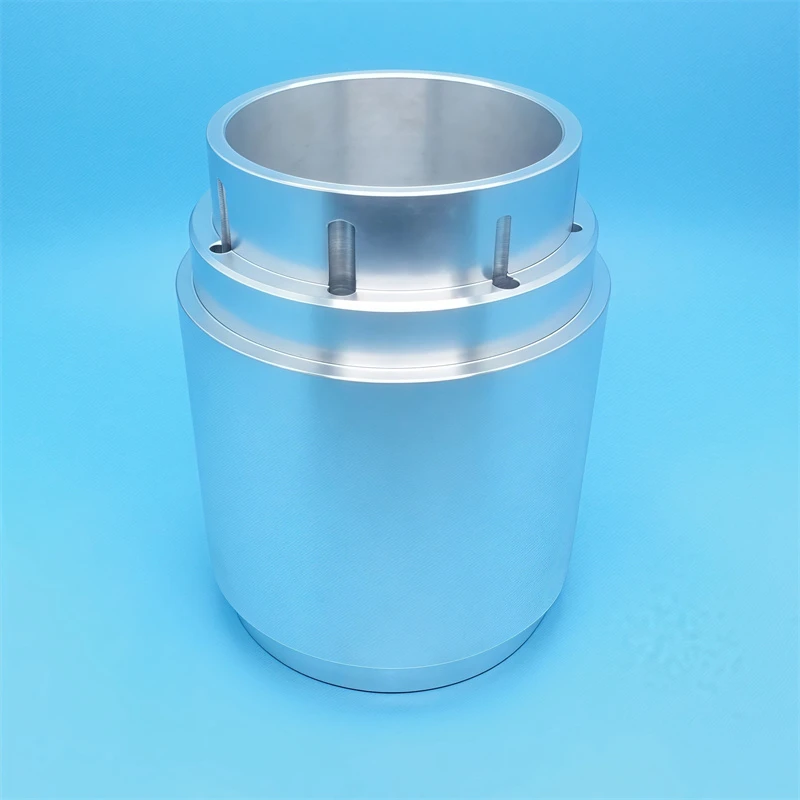
First, let’s stop mixing up thrust and radial bearings, ’cause that’s a common mix-up. Radial bearings handle the “side-to-side” push of a shaft spinning like a bike wheel’s hub pressing against the axle. Thrust bearings? They’re the ones that stop your shaft from sliding forward or backward—like when a steam turbine’s turbine blades push the shaft forward, or a pump’s impeller yanks it in the opposite direction. Without the right thrust bearings, that sliding motion would grind metal on metal, melt parts, or shut your whole operation down in minutes.
Now, the big question: fluid film thrust bearings. What makes them different from the crummy sleeve bearings you might’ve used in old equipment? The core principle is all about separating two metal surfaces with a thin, pressurized layer of fluid—usually oil, sometimes even water or specialty fluids for harsh environments—so they never actually touch. That’s not just a vague “lubrication” thing; it’s a specific physics trick that relies on three key factors: relative motion, wedge geometry, and fluid viscosity.
Let’s break down each part like you’re standing right next to our production floor. First up: relative motion. If you’ve got a stationary part (let’s call it the runner, since it’s mounted to your rotating shaft) and a stationary housing part (the bearing pad, bolted to your machine’s frame), neither one alone does anything. But when the shaft starts spinning, the runner drags the fluid along with it, right? Think about rubbing your hands together—if one hand’s flat and the other moves, it pulls the air (or in this case, oil) between them. That’s the start of a pressure buildup.
Next, the wedge. Our thrust bearings aren’t flat—each pad has a slight, intentional slope, like a tiny hill that tilts toward the direction of shaft rotation. As the runner spins, it pulls oil into the thin gap between pad and runner. The gap gets narrower as you move along the rotation path, so the oil gets squeezed into that tight space—and that squeezing builds pressure. That’s the fluid film’s backbone: that pressurized oil pushes back against the load on the shaft, holding the two metal surfaces apart. No contact, no friction, no wear.
Wait, what if the shaft stops? Oh, right—when rotation slows, the wedge pressure drops. If it stops cold, you might get a tiny bit of metal-on-metal contact at first, but we engineer our bearings to handle that. Add a tiny bit of “run-in” time for equipment startups, and that initial wear is negligible compared to what would happen with unlubricated parts. Even better, that fluid film isn’t just a static layer—it’s a dynamic system that adjusts: if your shaft’s load gets heavier, the film gets a tiny bit thinner, which builds more pressure to compensate. If it’s lighter, the film thickens a little to keep things stable. That’s why these bearings work for everything from small electric motors to 100-ton steam turbines.
Now, let’s talk about viscosity. That’s just a fancy word for a fluid’s “thickness”—like honey vs. water. If your fluid’s too thin (low viscosity), it won’t build enough pressure in the wedge to separate the surfaces. If it’s too thick (high viscosity), it’ll take too much power to drag it around, wasting energy and overheating. We work with customers every day to pick the right viscosity—for example, a marine pump in saltwater uses a corrosion-resistant hydraulic oil, while a high-speed turbine uses a thin, heat-stable synthetic oil. That’s not one-size-fits-all, and that’s where our supplier experience comes in: we don’t just sell bearings, we help you match the fluid to your setup.
You might’ve heard terms like “hydrodynamic” or “hydrostatic” thrown around, and let’s clear that up. Most fluid film thrust bearings you’ll work with are hydrodynamic—they rely on the shaft’s own motion to build that pressure. Hydrostatic bearings, on the other hand, use an external pump to push fluid into the gap, so they work even at startup when the shaft isn’t spinning fast enough. We do both, but 90% of the bearings we supply are hydrodynamic ’cause they’re simpler, cheaper, and use way less power—perfect for most industrial applications.
Let’s ground this in a real example, since theory means nothing if it doesn’t solve your problems. Last year, a customer running a 50-ton gas compressor had issues with their old thrust bearings failing every 12 months. When they switched to our custom-designed fluid film thrust bearings, what changed? We adjusted the wedge angle to match their operating speed (1,800 RPM), picked a synthetic oil with the exact right viscosity for their ambient temp (it’s 100°F where they’re based), and added a few extra grooves to help the oil circulate. Now those bearings run 3x longer, and their downtime dropped by 80%. That’s the kind of real-world win we’re here for.
Wait, let’s address a common myth: some people think fluid film bearings are only for big, heavy equipment. Nope—we make them for small electric motors (even 1HP ones!) too. The same principle applies: the runner spins, pulls fluid, builds a wedge, separates the surfaces. The only difference is the wedge size and fluid type. For small motors, we might use a grease-based fluid instead of oil, since it lasts longer and doesn’t need constant circulation. That’s customization at work, not just off-the-shelf parts.
Now, what about the “bearings” themselves? Each fluid film thrust bearing is made up of multiple pads—usually 3 to 12, depending on load. Those pads are often lined with a soft material like babbitt (a tin or lead alloy) to help with that initial startup contact, and to keep the fluid film stable. When the shaft spins, all those pads work together, each generating a tiny bit of pressure, so the whole bearing can handle uneven loads. If one pad wears a little, the others pick up the slack—another reason these bearings are more durable than traditional ones.
Let’s talk about wear, since that’s what you care about most. Traditional bearings (like ball or roller thrust bearings) have rolling elements that can wear out, seize, or get damaged by contaminants. Fluid film bearings? No rolling elements—just two metal surfaces separated by oil. The only wear comes from tiny amounts of fluid contaminants, which is why we recommend regular fluid checks, but even then, wear is almost unnoticeable over 5+ years of use. That translates to less maintenance, fewer part replacements, and more uptime for your operation.
Of course, there are limits. If your load is way too high, or your shaft spins way too slow, the wedge pressure might not be enough. That’s where hydrostatic bearings come in, as I mentioned earlier—they add external pressurized fluid to the gap, so they work at any speed, even when the shaft isn’t moving at all. We don’t push hydrostatics on customers where they don’t need ’em, but we’ll recommend ’em if your setup runs at low speed or has variable loads. That’s the supplier’s job: not just selling a product, but matching the right tech to your needs.
Another thing: heat management. Friction is the enemy of any rotating machine, and fluid film bearings have almost zero friction—so they run cooler. That means less energy wasted, no overheating of adjacent parts, and longer life for your whole equipment. We even design some bearings with cooling grooves that circulate cold fluid through the pads, perfect for high-speed applications like turbines where heat could be a problem.
Let’s circle back to the core lubrication principle to make sure we’ve got it right, no gaps. It’s a closed loop of three steps:
- Startup: Shaft starts spinning, fluid is dragged into the gap between pad and runner.
- Wedge Formation: As the gap narrows along the rotation direction, fluid is squeezed, building pressure equal to the load on the shaft.
- Steady Operation: The pressurized fluid film maintains a constant separation between metal surfaces, eliminating contact, friction, and wear.
That’s it. No magic, just physics that’s been tested for over a century, but refined by us over decades of building these bearings.
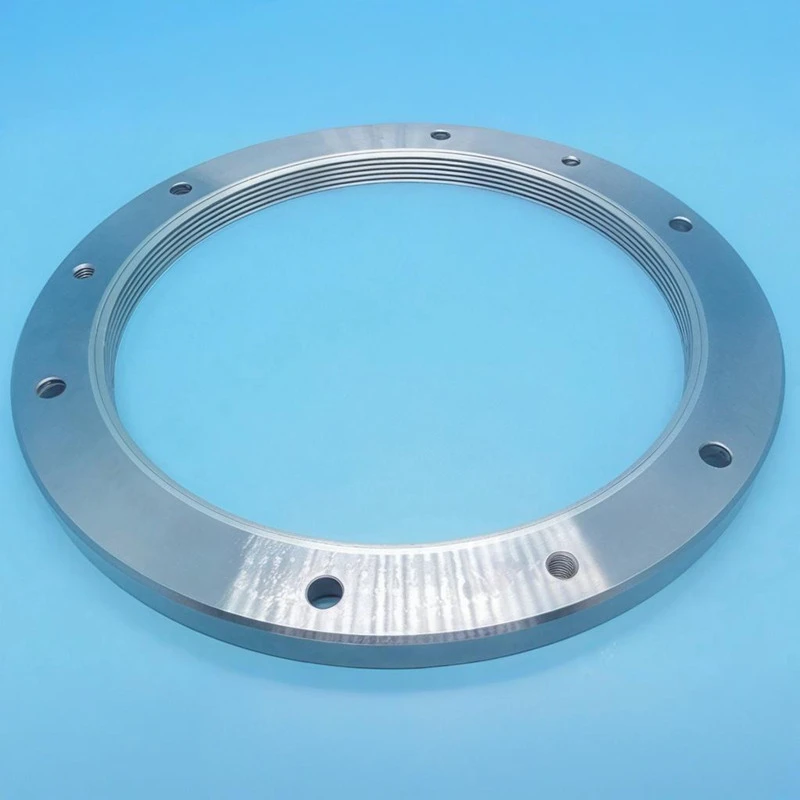
Now, if you’re reading this, you’re probably dealing with a part that’s failing, or looking to upgrade your current setup to cut downtime. We’ve helped hundreds of customers troubleshoot bearing issues, customize designs for their specific equipment, and get parts shipped fast (we know downtime doesn’t wait). If you want to talk through your needs—whether it’s a small motor thrust bearing, a large turbine setup, or something in between—reach out to our team to connect on a purchase or inquiry. We don’t do generic sales pitches; we talk your language, share real customer stories, and make sure you get a bearing that works for your gear, not just the cheapest one on the market.
Fluid Film Bearings References
- Stansfield, F. D. (1970). Hydrodynamic Lubrication of Thrust Bearings. American Society of Mechanical Engineers.
- Cameron, A. (1966). The Principles of Lubrication. Longman Scientific & Technical.
- Fluid Film Bearings Association. (2022). Industrial Application Guide for Thrust Bearings. International Association of Lubrication Engineers.
- Rowe, W. B. (2012). Hydrodynamic Lubrication. CRC Press.
Wenzhou Zhengbang Bearing Co., Ltd.
We are one of the most professional fluid film thrust bearings manufacturers and suppliers in China. With abundant experience, we warmly welcome you to buy customized fluid film thrust bearings at competitive price from our factory. If you have any enquiry about free sample, please feel free to email us.
Address: Units 1-1 and 3-1, Building 12, Yongxing Nanyuan Small and Micro Enterprise Startup Park, Binhai 2nd Road, Yongxing Subdistrict, Longwan District, Wenzhou City, Zhejiang Province.
E-mail: zbbearing@zbbearing.com
WebSite: https://www.zb-bearings.com/
